

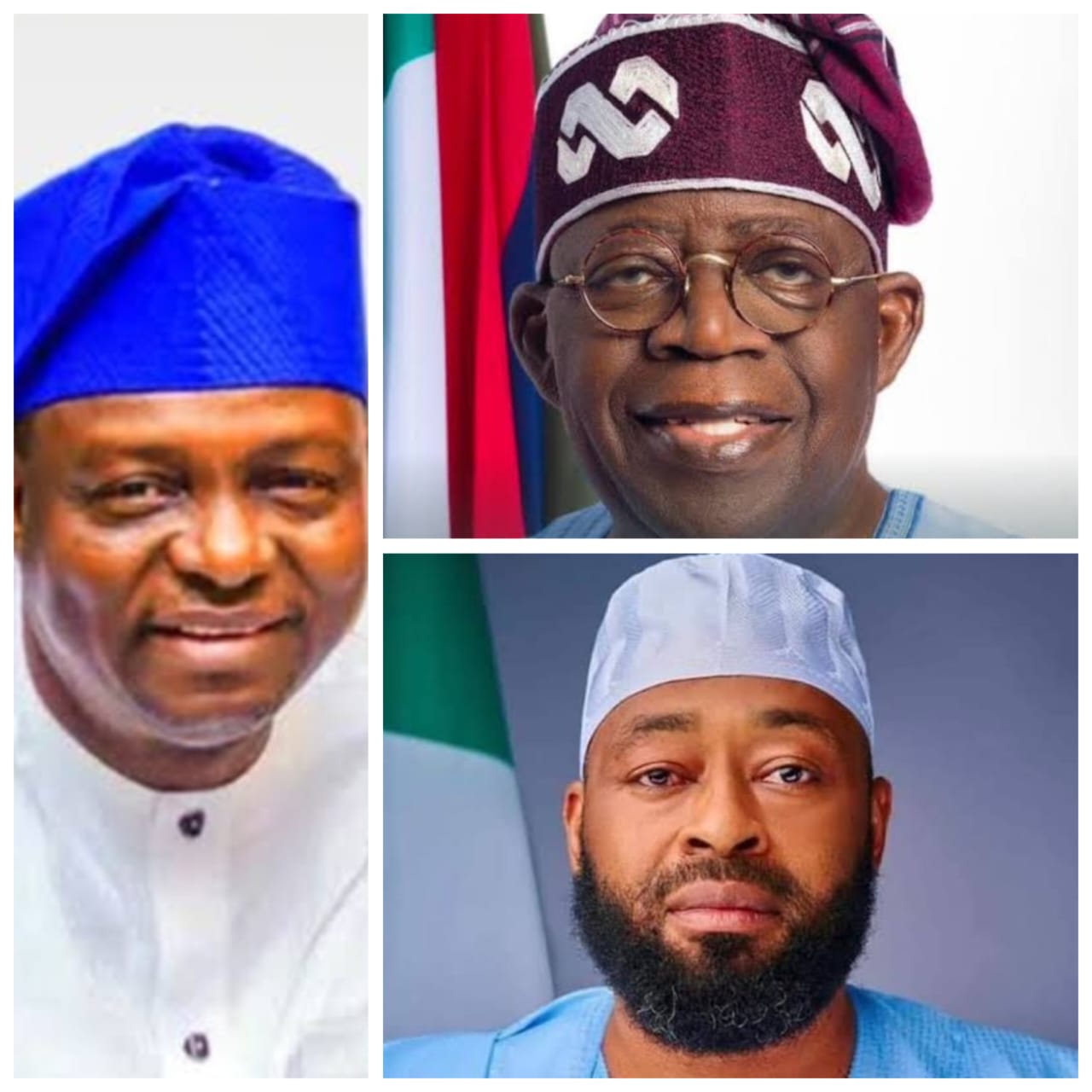
AN OPEN LETTER TO PRESIDENT BOLA AHMED TINUBU, GCFR, AND THE NATIONAL LEADERSHIP OF THE ALL PROGRESSIVES CONGRESS (APC)
His Excellency,
Bola Ahmed Tinubu, GCFR
President and Commander-in-Chief of the Armed Forces
Federal Republic of Nigeria
State House, Abuja.
Your Excellency, Mr. President,
NIGER STATE AT A CROSSROADS: AN URGENT APPEAL FOR ACCOUNTABILITY, RESPONSIBLE LEADERSHIP AND POLITICAL RECONCILIATION
I write this open letter as a concerned citizen of Niger State, not out of malice, partisan hostility or a desire to undermine the constitutional authority of the present administration, but out of a deep and growing concern about the direction in which our state is moving after three years of the current government, because the people of Niger State are increasingly asking whether the promises, expectations and enormous political goodwill that accompanied the administration’s emergence in 2023 have translated into the kind of governance, development and improvement in living conditions that citizens were entitled to expect.
Three years, in the life of a government, is not a short period, and while no responsible citizen should demand perfection from any administration, three years is certainly long enough for the people to evaluate whether a government has established a clear direction, whether its policies are producing measurable outcomes, whether its campaign promises are being progressively fulfilled and whether public resources are being converted into tangible improvements in healthcare, education, water supply, security, infrastructure, employment and the general welfare of the population.
It is therefore neither unreasonable nor politically motivated for the people of Niger State to ask what has been achieved, what remains outstanding, what has gone wrong, how public resources have been deployed and what corrective measures are now required to restore public confidence in government.
Niger State is one of Nigeria’s most strategically important states, blessed with enormous agricultural potential, extensive land, substantial water resources, human capital and a geographical position that should make it a major centre of agriculture, industry, energy, commerce and national development, yet these advantages can only become meaningful to ordinary citizens when they are matched by competent institutions, prudent management of public resources, sound policies and leadership that is sufficiently humble to listen, sufficiently courageous to acknowledge failure and sufficiently competent to turn opportunities into measurable improvements in people’s lives.
Unfortunately, there is now a growing sense of frustration across the state, particularly within the Local Government Areas, where government should ordinarily be closest to the people but where citizens continue to experience poverty, inadequate infrastructure, weak public services and a perceived decline in the effectiveness of local administration, raising legitimate questions about whether the enormous resources available to government are actually reaching the communities for whom they are intended.
The situation demands attention because Local Government Areas should not exist merely as administrative boundaries on a map or as political structures activated during elections; they should be the frontline of development, where citizens can see government through functioning primary healthcare facilities, accessible schools, potable water, rural roads, agricultural support, social programmes, security coordination and responsive administration, and where these services remain inadequate, the responsibility of government is not to dismiss citizens’ concerns as political criticism but to listen, investigate, measure performance and correct what is not working.
HEALTHCARE AND THE BASIC RESPONSIBILITIES OF GOVERNMENT
Mr. President, healthcare is perhaps one of the clearest measures by which citizens can determine whether government is genuinely improving their welfare, and the persistent concerns surrounding healthcare infrastructure, staffing, equipment, medicines, emergency services and the functionality of primary healthcare facilities across parts of Niger State therefore deserve far more serious attention than political rhetoric can provide.
The question that government should be prepared to answer is straightforward: after three years in office, are ordinary citizens receiving better healthcare today than they were before the present administration assumed office, and if the answer is yes, where are the measurable statistics showing the number of facilities renovated or constructed, the number adequately equipped, the number with sufficient medical personnel and essential drugs, and the number of communities that can now access reliable and affordable healthcare without having to travel unreasonable distances?
These are not hostile questions, nor are they questions that should provoke anger from those in authority, because a government that is confident in its achievements should welcome the opportunity to demonstrate them publicly, transparently and with verifiable evidence.
WATER, EDUCATION AND THE FUTURE OF OUR PEOPLE
Access to safe and reliable water is another fundamental responsibility of government, and it is difficult to understand why communities in a state blessed with significant water resources should continue to experience serious difficulties accessing dependable potable water, particularly when public resources are being allocated to water projects that should ultimately be judged not by the ceremonies surrounding their commissioning but by whether water actually flows from them and whether the communities for whom they were intended are genuinely benefiting.
The same principle applies to education, because no state can realistically claim to be preparing for a prosperous future when its children are unable to receive quality education in safe and functional environments, and the situation becomes even more serious when insecurity forces schools to close or prevents children from attending classes regularly, thereby creating not merely an educational problem but a generational crisis that can permanently affect the future prospects of thousands of young Nigerlites.
The Federal Government, the Niger State Government and the security agencies must therefore treat the protection of schools and the restoration of safe access to education as an urgent priority, because every child who loses months or years of education because of insecurity is potentially losing opportunities that can never be fully recovered.
SECURITY AND THE DUTY TO PROTECT CITIZENS
Mr. President, insecurity remains one of the most serious challenges facing Niger State, with kidnapping, banditry and attacks on vulnerable communities affecting farming, education, commerce and the general economic life of the state, and although the Federal Government bears the primary constitutional responsibility for national security and your administration has an important role through the nation’s security agencies, the magnitude of the challenge requires sustained and coordinated action between federal and state authorities, including effective intelligence, community engagement, rapid response, protection of vulnerable settlements and the creation of conditions in which farmers, businesses, teachers, students and ordinary families can live and work without constant fear.
Citizens do not want government merely to issue condolences after attacks have occurred; they want the kind of preventive security architecture that makes it possible for families to sleep peacefully, farmers to return safely to their farms, children to attend school and businesses to operate without the fear that their livelihoods or lives could be destroyed by criminals.
PUBLIC RESOURCES AND THE QUESTION OF ACCOUNTABILITY
Mr. President, perhaps one of the most important questions confronting Niger State is how public resources are being managed and what measurable outcomes those resources are producing, because the citizens who ultimately provide the mandate for government have a legitimate right to know how much money the state receives, how much is generated internally, how much is spent, where it is spent, what projects are being implemented, how much those projects cost, who executes them, whether they are completed and, most importantly, whether they are delivering the intended benefits.
This is not an accusation of wrongdoing, nor should it be interpreted as one, because transparency is a basic requirement of democratic governance and should be welcomed by every administration that is confident in the integrity and effectiveness of its financial management.
The state government should therefore be encouraged to provide citizens with accessible information concerning revenue received from the Federation Account and other sources, internally generated revenue, budgeted versus actual expenditure, capital project implementation, healthcare and education spending, water and infrastructure investments, Local Government funding, borrowing and debt obligations, procurement arrangements, contractor information and the status of major projects, because where government has performed well, the evidence will strengthen public confidence, while where implementation has fallen short, the same evidence will help identify the shortcomings and provide the basis for corrective action.
Where credible allegations of financial misconduct arise, the appropriate investigative institutions should be permitted to investigate independently and without political interference, because transparency is not a threat to responsible government; rather, transparency is one of the strongest protections a responsible government can have.
THE POLITICAL CULTURE IN NIGER STATE AND THE NEED FOR RESTRAINT
Your Excellency, there is another matter that deserves the serious attention of the APC National Leadership, namely the increasingly confrontational nature of political relationships within Niger State and the public exchanges involving the Governor and senior political figures such as Senator Abubakar Sani Bello, former Governor of Niger State, as well as Senator Sani Musa, representing Niger East Senatorial District and other senior stakeholders.
Political disagreement is not a problem in itself, because democracy is built upon differences of opinion, competing ideas and the legitimate contest for political influence, but when political disagreement increasingly becomes characterised by personal insults, public humiliation, inflammatory exchanges or conduct that creates the impression that political opponents are enemies rather than fellow citizens, the consequences extend beyond the individuals involved and begin to undermine the dignity of public office and the political culture of the state.
The Governor of Niger State is the Chief Executive of the entire state, and that responsibility extends to citizens who support him, those who oppose him and those who have no political affiliation whatsoever, just as it extends to former governors, serving senators, members of the opposition, traditional leaders, civil servants, journalists and ordinary citizens, and because the office of Governor carries substantial institutional authority, it demands a corresponding degree of restraint, maturity and respect for legitimate disagreement.
A Governor should be able to disagree without degrading, defend his administration without humiliating his critics and respond to allegations or criticism with evidence, facts and performance rather than personal confrontation, because the strength of leadership is not demonstrated by the number of opponents a politician can overpower but by the ability to remain composed under criticism, protect institutions and continue to deliver results.
POWER MUST BE TEMPERED BY RESPONSIBILITY
Mr. President, there is a fundamental difference between strong leadership and a style of governance that becomes unnecessarily combative, because strong leadership can be decisive without being arrogant, confident without being contemptuous, firm without being abusive and politically strategic without becoming vindictive, while a government that begins to treat criticism as disloyalty or political disagreement as personal hostility risks creating an environment in which public servants become afraid to speak, political actors become afraid to disagree and citizens become reluctant to demand accountability.
No elected official should become larger than the institutions of the state, because political power is temporary while institutions and the people they serve are permanent, and every person entrusted with public office should therefore remember that authority is not a personal possession but a responsibility exercised on behalf of citizens.
The people of Niger State do not need a Governor who spends valuable political energy attempting to win every argument with political opponents; they need a Governor who wins the confidence of the people through better hospitals, functioning schools, reliable water supply, safer communities, improved infrastructure, support for farmers, employment opportunities, effective Local Government administration and transparent management of public resources.
The most convincing answer to criticism is not an insult but performance, and the most powerful response to a political opponent is not intimidation but the demonstrable improvement of the lives of the people.
THE APC MUST NOT CONFUSE LOYALTY WITH SILENCE
This is where the APC National Leadership must demonstrate the maturity expected of a governing political party, because while political parties naturally defend their administrations against unfair attacks, party loyalty cannot mean unconditional defence, nor should political solidarity prevent the party from asking difficult questions when citizens raise legitimate concerns about governance.
If the Niger State Government is performing well, the APC should be able to defend its record with facts, figures and verifiable achievements; if it is underperforming, the party should have the courage to encourage correction; if senior political figures are locked in destructive confrontation, the party should provide a platform for reconciliation; and if there are credible allegations of abuse of authority or financial misconduct, the appropriate institutions should be permitted to investigate them without political interference.
The APC should therefore promote a political culture founded on loyalty without sycophancy, disagreement without insults, authority without arrogance, competition without destruction and leadership without impunity, because the party’s credibility ultimately depends not only on its ability to win elections but also on the quality of governance delivered under its banner.
MR. PRESIDENT, NIGER STATE NEEDS YOUR ATTENTION
Your Excellency, this appeal does not ask you to unlawfully interfere with the constitutional authority of the Niger State Government; rather, it asks you, as President of the Federal Republic of Nigeria and national political leader of the APC, to take seriously the growing concerns emerging from a state of enormous national importance and to encourage the kind of objective assessment that can strengthen governance, improve accountability and restore public confidence.
We therefore respectfully urge the Federal Government and APC National Leadership to encourage a comprehensive and objective assessment of governance in Niger State since 2023, covering the implementation of campaign promises, state revenue and expenditure, budget performance, healthcare delivery, education and school safety, water supply, roads and infrastructure, agriculture and rural development, Local Government administration, security and community protection, youth employment and empowerment, procurement and project implementation, debt and financial obligations and, above all, the measurable social and economic impact of government expenditure.
The purpose of such an assessment should not be to embarrass the state government, weaken the APC or create another political battlefield, but rather to identify what is working, expose what is not working, encourage corrective measures and ensure that the people of Niger State receive the quality of governance to which they are entitled.
THIS IS ABOUT THE PEOPLE OF NIGER STATE
It would be convenient for those in power to dismiss criticism as political opposition, but the farmer who cannot safely access his farm, the parent who fears for the safety of a child travelling to school, the patient unable to obtain adequate medical care, the young person without meaningful employment and the family struggling to obtain clean water are not primarily concerned with political factions; they are concerned with survival, dignity, opportunity and the future.
That is why their concerns must be heard, because the ultimate purpose of government is not to protect the image of government but to protect and improve the lives of the people.
MR. PRESIDENT, THE TIME TO ACT IS NOW
Your Excellency, Niger State can still fulfil its enormous potential, but doing so will require a renewed commitment to competent governance, transparency, accountability, security, political tolerance, institutional integrity and measurable performance, and we therefore respectfully call upon you and the APC National Leadership to encourage an objective assessment of the performance of the Niger State Government, demand greater transparency in the management of public resources, promote reconciliation among senior political stakeholders, encourage respectful political engagement and discourage personal insults, ensure that legitimate criticism is not treated as political hostility, strengthen federal and state collaboration on security, demand measurable improvements in healthcare, education, water and infrastructure and, above all, ensure that the people of Niger State remain at the centre of political and development priorities.
This is not a call for political persecution, nor is it a request for unconstitutional interference in state affairs; it is a call for responsible political leadership, democratic accountability and the courage to confront difficult questions before public frustration becomes deeper and political divisions become more destructive.
CONCLUSION: NIGER STATE DESERVES BETTER
Mr. President, history will judge every administration not by the volume of its speeches, the number of projects announced or the intensity of its political battles, but by the condition in which it leaves the people it was elected to serve, and Niger State has waited long enough for the benefits of its enormous potential to become tangible in the lives of ordinary citizens.
Three years is sufficient time for citizens to ask difficult questions, demand evidence, evaluate promises against performance and expect the APC to determine whether its government in Niger State is strengthening or weakening public confidence in the party and in democratic governance.
The people of Niger State do not need political warfare when they are struggling with poverty and insecurity; they need leadership that listens, institutions that function and government that delivers.
They do not need insults when they are asking legitimate questions about their future; they need answers supported by facts and evidence.
They do not need endless promises when their communities are crying out for healthcare, education, water, roads, security and economic opportunity; they need measurable results.
And they certainly do not need leaders who regard political authority as a licence to place themselves beyond criticism; they need public officials who understand that power is entrusted to them temporarily and must be exercised with humility, restraint, accountability and respect for the people.
Mr. President, Niger State is calling for attention, the people are watching, the APC is being judged and the time has come for the Federal Government and the party leadership to listen, not to one faction, not to one politician and not to one political interest, but to the people whose votes and taxes sustain the institutions of government.
Let the books be opened, let performance be measured, let institutions work, let political differences be resolved with dignity and let government return to the fundamental business of serving the people.
The office of Governor is temporary, political power is temporary and political parties are temporary, but Niger State is permanent and its people will continue to live with the consequences of the decisions made by those entrusted with its leadership.
Mr. President, we respectfully ask you to act, not against Niger State, but for Niger State; not against the government, but for good governance and leadership; not for one political faction, but for the people.
The future of Niger State should not be sacrificed to political rivalry, administrative weakness or the misuse of public authority.
Niger State deserves better, and the people of Niger State deserve nothing less.
Respectfully,
Dr. Mohammed K. Ibrahim
University Teacher &
A Concerned Citizen of Niger State.
Email: mki72@gmail.com
CC: The National Chairman and National Leadership
All Progressives Congress,
Abuja.