PETER OBI, IPOB AND THE BURDEN OF NATIONAL TRUST
By: Nehemiah Gagara
Politics is not merely a contest for power. It is a contest for trust. It is the solemn duty of persuading millions of people that the destiny of a nation is safest in one’s hands. In a country as fragile, diverse and historically burdened as Nigeria, those who seek the highest office must carry not only ambition but also the weight of national confidence.
Therefore, as the political horizon gradually brightens toward 2027, old questions are resurfacing and new concerns are emerging. The drums of another electoral season are beginning to echo across the land. Once again, Nigerians are compelled to scrutinize those who seek to inherit the keys to the nation’s future.
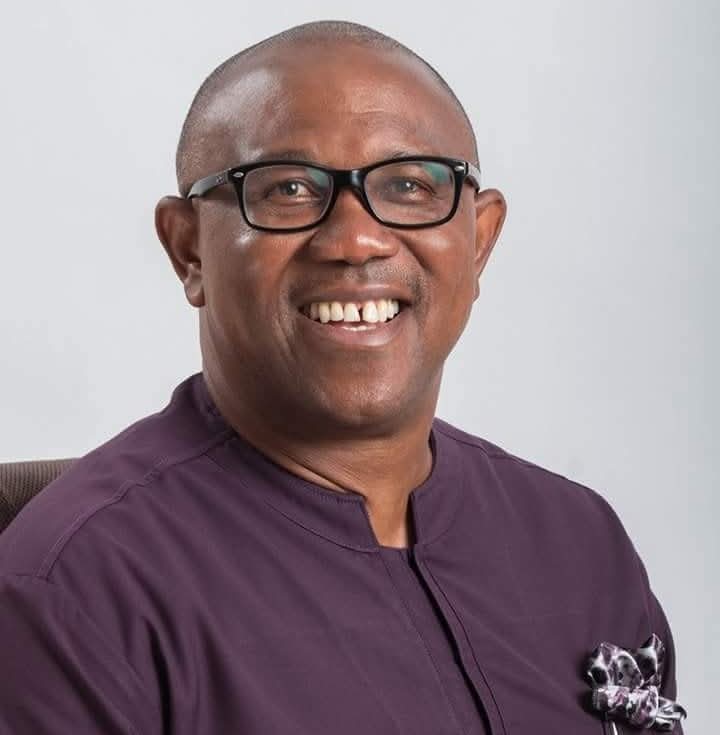
Perhaps, among those under intense public examination is Peter Obi, a politician whose rise has inspired passionate support but has also generated profound apprehension in many quarters of the country.
It should be noted that a nation survives not only on constitutions and institutions. It survives on perception, confidence and collective belief. Once trust begins to crack, suspicion rushes in like floodwaters through a broken dam. This is precisely why many Nigerians continue to interrogate Obi’s credibility in view of his perceived relationship with issues surrounding the operations of the Indigenous People of Biafra (IPOB) ESN and the broader separatist agitation in the Southeast.
The Indigenous People of Biafra remains one of the most controversial organizations in contemporary Nigerian history. To many citizens, its activities represent a challenge to the sovereignty and unity of the Federal Republic.
Consequently, every public figure associated with discussions surrounding the group inevitably attracts scrutiny.
For critics of Peter Obi, the concern is not merely about words spoken or statements issued. It is about political symbolism. It is about what many perceive as an unwillingness to decisively and consistently distance himself from narratives capable of encouraging separatist sentiments. Whether fair or unfair, such perceptions continue to linger in the minds of millions of⁴ Nigerians.
Leadership therefore, is not only about what one says. It is also about what one is seen to tolerate. In politics, silence can become a language. Ambiguity can become a message. And perception can become reality. On this note, one has no option than to doubt the sincerity of Obi’s one nation, since his silence on the activities IPOB and ESN leaves much to be desired.
Undoubtedly, the debate surrounding Obi’s political movement extends beyond IPOB. It touches broader concerns about the nature of the Obidient phenomenon itself. To his supporters, it is a revolutionary force for change. To the critics, it increasingly resembles a movement fueled by grievance, emotional mobilization and digital populism.
History teaches a simple lesson: nations are rarely destroyed by their enemies alone. More often, they are weakened by internal divisions, mutual suspicion and the gradual erosion of national cohesion. The wise politician therefore builds bridges where others erect walls. He heals wounds instead of reopening scars. Now, what position can we situate Obi under these circumstances?
This is why many observers remain uncomfortable with some of the rhetoric that dominated the 2023 election cycle. Such popular slogan by Peter Obi of “Take Back Your Country” electrified supporters and energized campaign crowds across the nation. Yet critics argue that such language, when deployed in an already polarized environment, risks creating an atmosphere of resentment rather than reconciliation.
Indeed, words are not ordinary instruments. They are political weapons. They can unite tribes or divide them. They can inspire hope or provoke hostility. They can calm storms or summon them.
Nigeria today stands at a dangerous crossroads. Ethnic mistrust remains alive beneath the surface. Religious sensitivities continue to shape public discourse. Regional grievances still compete for attention in the national conversation. Therefore, in such circumstances, every presidential aspirant carries a sacred responsibility to speak in ways that strengthen the nation’s fragile bonds.
Equally troubling to many Nigerians is the growing culture of disrespect toward historical figures who laid the foundation of the modern Nigerian state. Men such as Sir Ahmadu Bello, the Sardauna of Sokoto, Sir Abubakar Tafawa or Balewa, Sunday Awoniyi, Micheal Audu Buba, Joseph Tarka, and even the likes of second republic Politicians including Shehu Shagari, Aminu Kano, Solomon Lar, Waziri Ibrahim, Olusola Saraki and the likes who occupy a special place in the nation’s political memory. Although we all know that the Sardaunas, the Tafawa Balewas and the likes were not perfect men, but they were nation-builders whose sacrifices helped shape the country that exists today.
Yet social media has become a battlefield where historical legacies are often attacked with little regard for facts, context or national sensitivity.
In particular, the normalization of insults against respected leaders reflects a broader crisis in political culture. A nation that constantly ridicules its history risks becoming a nation without direction.
The fundamental question therefore remains: what kind of leadership does Nigeria need at this critical moment?
The answer cannot simply be competence. It cannot simply be popularity. It cannot simply be social media enthusiasm or electoral excitement. Nigeria requires leadership capable of commanding trust across ethnic, religious and regional boundaries. The presidency is not a tribal throne. It is not a regional inheritance. It is not a sectional trophy to be won by one group against another. Can we trust Obi to the exalted seat of the President.
Having examined Peter Obi’s past record, it is only apt for any one to begin to question the reasons why former Kano state Governor Alhaji Rabi’u Musa Kwankwaso will now align with a perceived sympathiser of a militants of IPOB and ESN to be his running mate
Certainly, the occupant of Aso Rock must become the custodian of every Nigerian hope and every Nigerian aspiration and not someone with separatist mind.
As 2027 approaches, Nigerians must resist the temptation of emotional politics and seductive slogans. They must look beyond viral campaigns, online propaganda and carefully crafted narratives. They must ask difficult questions. They must examine records. They must interrogate associations. Above all, they must determine whether those seeking power possess the temperament, judgment and national outlook required to govern a complex and diverse republic.
The future of Nigeria is too precious to be entrusted to uncertainty.
In the end, leadership should be a bridge across rivers of division, not a sail that catches the winds of discord. It should be a lamp that illuminates the path of national unity, not a spark that ignites old tensions. For when the dust of campaigns settles and the noise of politics fades, what remains is the nation itself.
And no ambition, however grand, should be greater than Nigeria.
Nehemiah Gagara is a retired Permanent Secretary in the Plateau State House of Assembly Commission