



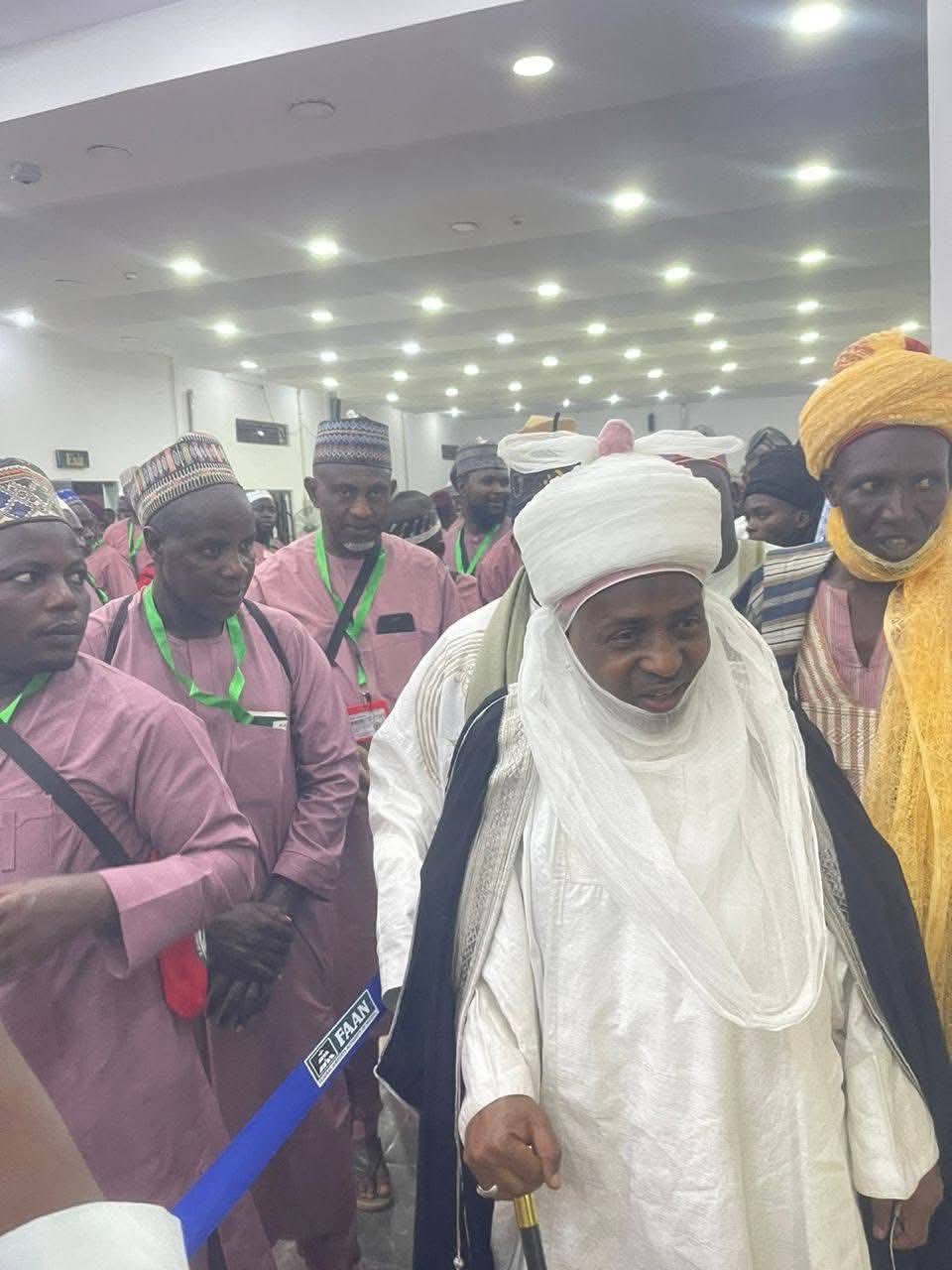
Kano Pilgrims in Saudi Arabia: A Model of Discipline, Patience and Devotion
By Lamara Garba Azare
As the 2026 Hajj pilgrimage gradually approaches its conclusion, one remarkable story that deserves to be told is that of the thousands of pilgrims from Kano State who have distinguished themselves through discipline, patience, humility and deep devotion to the worship of Allah despite numerous challenges encountered during the exercise.
Hajj is not merely a physical journey; it is a test of faith, endurance, sacrifice and character. For the over 4,000 pilgrims from Kano State currently in the Kingdom of Saudi Arabia, the exercise has presented both spiritual opportunities and administrative challenges. Yet, throughout their stay in the Holy Land, they have remained exemplary ambassadors of Kano State and Nigeria.
Observers within the Nigerian contingent have consistently commended Kano pilgrims for their orderly conduct, respect for regulations and commitment to religious activities. Whether in Makkah, Madina, Mina, Arafat or Muzdalifah, the pilgrims demonstrated a level of discipline that attracted admiration from fellow pilgrims and officials alike.
This commendable conduct becomes even more remarkable considering some of the difficulties encountered during the Hajj operations. Many Kano pilgrims arrived in the Holy Land later than expected, reducing the number of days they were initially expected to spend in Madina. There were also concerns regarding some operational challenges experienced during the exercise.
Yet, instead of allowing these challenges to distract them from the purpose of their journey, the pilgrims remained focused on prayers, supplications, recitation of the Holy Qur’an and other acts of worship.
Perhaps nowhere was their resilience more evident than during their stay at Mina, where millions of pilgrims from across the world gathered to perform one of the most demanding rites of Hajj. Despite the congestion, movement restrictions and the physical demands associated with the exercise, Kano pilgrims conducted themselves with patience and maturity.
Many spent their time in continuous remembrance of Allah, seeking forgiveness, praying for their families, Kano State and Nigeria. Their camps were often filled with the sound of Qur’anic recitations, Islamic lectures and collective prayers.
The pilgrims understood that the essence of Hajj lies not in comfort but in submission to the will of Allah. Their patience under difficult circumstances reflected the true spirit of the pilgrimage and the values for which Kano is widely known.
While the pilgrims deserve commendation for their exemplary behaviour, equal recognition must be given to the Kano State Government under the leadership of Governor Abba Kabir Yusuf for introducing several welfare initiatives that significantly improved the pilgrims’ experience in the Holy Land.
From the onset of the exercise, the governor demonstrated genuine concern for the welfare and comfort of Kano pilgrims. One of the most appreciated interventions was the provision of free shuttle bus services between the pilgrims’ hotels and the Haram in Makkah.
Although the accommodation secured for the pilgrims was relatively close to the Grand Mosque, the governor considered the challenges associated with long-distance walking, particularly for elderly pilgrims and those with health concerns. The introduction of the shuttle buses made daily movement easier and more convenient.
Many pilgrims described the initiative as unprecedented, noting that it was the first time such a service had been provided on a large scale for Kano pilgrims. The gesture enabled thousands of pilgrims to attend prayers at the Holy Mosque with greater ease and comfort.
Governor Abba Kabir Yusuf also demonstrated his commitment to the welfare of the pilgrims by providing special financial support, including assistance towards the payment of Hadaya, thereby reducing the financial burden on many pilgrims during the Hajj exercise.
These interventions sent a clear message that the administration values the wellbeing of its citizens, even when they are thousands of kilometres away from home.
The success recorded by Kano pilgrims was also made possible by the tireless efforts of the Director General of the Kano State Pilgrims Welfare Board, Alhaji Ibrahim Abubakar Matawalle. A seasoned administrator with vast experience in public service, Matawalle remained actively involved in coordinating welfare services and addressing operational challenges throughout the pilgrimage.
His hands-on leadership style ensured that complaints and concerns raised by pilgrims received prompt attention. Working closely with officials of the board, he maintained regular contact with pilgrims and monitored developments across various camps and accommodation centres.
Similarly, the Amirul Hajj and Emir of Gaya, Alhaji Dr. Aliyu Ibrahim Abdulkadir, provided exemplary leadership throughout the exercise. His presence among the pilgrims offered reassurance and confidence at critical moments.
The Amirul Hajj consistently engaged with pilgrims, listened to their concerns and worked with relevant authorities to address emerging issues. His commitment to the welfare of the pilgrims was evident in his regular visits to camps, accommodation facilities and healthcare centres.
Members of the Amirul Hajj delegation also played significant roles in ensuring that pilgrims received the necessary support and guidance required for the successful completion of their religious obligations.
Beyond the official responsibilities entrusted to them, both the Amirul Hajj and the Director General demonstrated uncommon dedication by making themselves accessible to pilgrims at virtually all times. Whether the issues related to accommodation, transportation, feeding, health concerns or documentation, they responded swiftly and worked diligently to find solutions.
The combined efforts of Governor Abba Kabir Yusuf, the Amirul Hajj, the Director General of the Pilgrims Welfare Board and other officials created an environment that enabled the pilgrims to concentrate on the spiritual essence of Hajj despite the challenges encountered.
As the pilgrims prepare for their eventual return to Nigeria, they do so with a sense of fulfilment, having successfully performed one of the most important obligations in Islam. More importantly, they are returning home with a reputation built on discipline, patience and devotion.
Indeed, the conduct of Kano pilgrims during the 2026 Hajj has demonstrated that adversity does not define a people; rather, it is their response to adversity that reveals their true character. Through patience in hardship, devotion in worship and discipline in conduct, Kano pilgrims have shown themselves to be worthy ambassadors of their state, their country and their faith.
Their story is one of resilience, sacrifice and steadfast devotion to Allah—a story that deserves to be remembered long after the 2026 Hajj comes to an end. At a time when challenges threatened to overshadow the pilgrimage experience, Kano pilgrims chose faith over frustration, prayer over complaints and unity over division. For that, they deserve recognition and appreciation from all who value the true spirit of Hajj.
Lamara Garba Azare, writes from Makkatul Mukarrama


